Tree Trimming vs. Pruning: What Toronto Homeowners Need to Know in 2026
What’s the difference?
If you own a home in Toronto and have trees on your property, you’ve likely heard both “tree trimming” and “pruning” used interchangeably—but they’re not the same thing. Understanding the distinction matters because choosing the wrong approach can cost you money, damage your trees, or violate city bylaws. Trimming typically refers to cutting back branches to control size and shape, often for aesthetic or safety reasons, while pruning is a more selective, arboricultural process focused on tree health, structure, and long-term vigor. In 2026, with Toronto’s expanding urban forest regulations and increasing property values, homeowners need clarity on which service solves their actual problem. The cost difference is real—trimming can run $300–$1,500 for a residential tree, while pruning often costs $400–$2,000 depending on the tree species, size, and health goals. Whether you’re managing overgrown branches near your roof, removing dead wood, or shaping a young tree for decades of growth, the decision hinges on your underlying goal and Toronto’s evolving tree protection bylaws. This guide breaks down both approaches so you can make an informed choice.
Side-by-side comparison
| Factor | Trimming | Pruning |
|---|---|---|
| Primary Goal | Size control, clearance, aesthetics | Health, structure, disease prevention |
| Cost Range (CAD) | $300–$1,500 | $400–$2,000 |
| Typical Timeline | 1–2 days | 1–3 days |
| Toronto Permit Required? | No (unless >25% crown removal) | No (unless structural/heritage tree) |
| Best For | Branches over roof, hedge shaping, quick cleanup | Young tree development, disease removal, mature tree care |
| Risk If Done Wrong | Over-pruning stress; poor regrowth; storm damage to compromised limbs | Topping; flush cuts; slow healing; long-term structural weakness |
Tree trimming — when it’s the right call
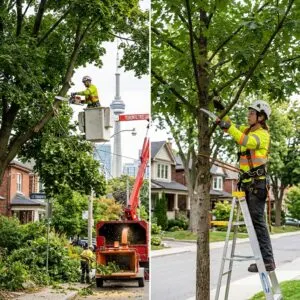
Trimming is the practical choice when your goal is straightforward size management or clearance. If branches are encroaching on your roof, blocking gutters, hanging over your neighbor’s property, or creating a safety hazard after a storm, trimming removes the offending growth quickly and cost-effectively. Homeowners typically opt for trimming when they notice branches rubbing power lines, blocking sunlight to a deck, or creating an unbalanced silhouette. The work is faster than pruning because it doesn’t require the same level of arboricultural assessment—a certified arborist or experienced tree service professional identifies the branches to remove and executes the cuts with standard tools and techniques. In Toronto’s urban context, trimming is especially useful for mature trees in established neighborhoods where managing growth is a recurring maintenance task. The lower cost ($300–$1,500) makes it accessible for budget-conscious homeowners, and the work can often be completed in a single day. However, trimming should still follow proper cutting standards—cuts should be made just outside the branch collar, never flush to the trunk, and no more than 25% of the tree’s crown should be removed at once. Improper trimming, such as topping or excessive heading back, can leave trees weakened, prone to disease, and slow to recover. If your primary concern is clearance and shape, trimming is efficient. If you’re worried about tree health or long-term structure, consider pruning instead.
Pruning — when it’s the right call
Pruning is the arboriculturist’s tool for tree health and structural development. It’s the right choice when you want to remove dead or diseased branches, improve air circulation within the canopy, establish a strong branch structure in a young tree, or reduce risk from weak crotch angles and crossing limbs. Professional pruning follows the ANSI A300 standards and International Society of Arboriculture (ISA) guidelines, which emphasize cuts that promote healing and long-term vigor. In Toronto, where ice storms and wind damage are recurring concerns, strategic pruning can reduce the risk of branch failure by removing included bark junctions and establishing a single central leader. Homeowners with heritage or mature trees should prioritize pruning over simple trimming because the selective approach preserves the tree’s natural form while addressing structural issues that could lead to costly failure down the line. Pruning typically costs more ($400–$2,000) and takes longer (1–3 days) because the arborist must assess each branch’s role in the tree’s overall structure and health before cutting. Young trees benefit enormously from early pruning—removing competing leaders and establishing good branch spacing sets them up for decades of healthy growth with fewer problems later. If your tree is showing signs of disease, has dead wood, or has an unbalanced structure, or if you’re investing in a young specimen tree, pruning is worth the extra cost and time. It’s a forward-looking investment in your tree’s longevity and your property’s safety and beauty.
Edge cases and Toronto-specific factors
Toronto’s tree protection bylaws add complexity to both trimming and pruning decisions. Trees with a diameter at breast height (DBH) of 30 cm or larger on private property require a permit for removal or significant alteration; trimming and pruning under 25% of the crown typically don’t require one, but you should verify with your local council before proceeding. Heritage trees—designated for historical or environmental significance—have stricter rules and may require arboricultural reports and ISA Certified Arborist involvement even for routine work. Additionally, if your property is in a neighborhood with restrictive covenants or a homeowners’ association, tree work may be governed by those agreements in addition to city bylaw. Insurance is another consideration: if a tree on your property causes damage to a neighbor’s home or car, your homeowner’s insurance may not cover it if the tree was visibly dead or diseased and you neglected to address it. Documentation of professional tree work—keep receipts and photos—protects you if a claim arises. Winter is generally the best season for both trimming and pruning in Toronto because trees are dormant, disease spread is lower, and visibility is clearer. However, avoid pruning in spring when trees are actively budding, as this diverts energy away from healing. Summer trimming for clearance is acceptable but stresses trees; fall work risks winter damage in newly exposed areas. If you’re uncertain about permit requirements or whether your tree qualifies as heritage or protected, consult an ISA Certified Arborist or contact Toronto’s Urban Forestry team before booking work.
Frequently asked questions
1. Do I need a permit to trim or prune my tree in Toronto?
For most residential trees, no permit is needed for trimming or pruning unless you’re removing more than 25% of the crown or your tree is heritage-designated. If your tree exceeds 30 cm DBH and requires substantial work, contact your local Toronto council office to confirm. When in doubt, ask your arborist to check before starting.
2. How much does professional tree trimming or pruning cost in Toronto?
Trimming typically ranges $300–$1,500 CAD; pruning ranges $400–$2,000 CAD, depending on tree size, health, accessibility, and removal of debris. Get quotes from three certified arborists to compare pricing and scope. Avoid unusually low bids, which often signal inexperience or cutting corners on safety and technique.
3. Can I trim or prune my own trees, or should I hire a professional?
Small branches within arm’s reach can be hand-pruned with sharp secateurs, but tree work above 10 feet or involving climbing is dangerous without training and equipment. Professional arborists carry liability insurance and follow safety standards; DIY mistakes can result in injury, property damage, or tree damage that costs more to fix later. Hire a professional for any work requiring a ladder or chainsaw.
4. What’s the best time of year for tree trimming and pruning in Toronto?
Winter (December–February) is ideal because trees are dormant, disease transmission is low, and visibility is clear. Late winter (February–March) allows trees to heal before spring growth. Avoid spring budbreak and late fall to prevent stress and winter die-back on newly exposed branches.
5. Will trimming or pruning hurt my tree?
Proper trimming and pruning strengthen trees by removing weak or diseased growth, but aggressive topping, flush cuts, and removing more than 25% of the crown at once can harm a tree’s ability to heal and survive. ISA Certified Arborists follow standards that minimize stress and maximize recovery. Choose an experienced professional to protect your tree’s health.
6. What’s the difference between a certified arborist and a general tree service in Toronto?
An ISA Certified Arborist has passed rigorous exams on tree biology, health, and pruning standards; a general tree service may have chainsaws but limited training in tree care. For trimming, either can work; for pruning or complex tree issues, a certified arborist’s expertise prevents costly mistakes and ensures your tree’s long-term health. Ask for credentials before hiring.
Bottom line
Choose trimming if: branches are encroaching on structures or utilities, you need quick size control, budget is tight, and your tree is otherwise healthy. Trimming is a practical, cost-effective solution for straightforward clearance and aesthetics.
Choose pruning if: your tree shows signs of disease, has structural issues (weak crotches, crossing limbs), you’re developing a young tree, or your tree is mature and you want to invest in its long-term health and safety. Pruning follows arboricultural science and prevents costly problems down the line.
In Toronto’s urban forest environment, both services have a role. Many homeowners benefit from a hybrid approach: professional pruning every 3–5 years to address health and structure, with light trimming in between for clearance as needed. Before booking work, confirm permit requirements with your local council, get written quotes from ISA Certified Arborists, and verify insurance coverage. If you’re unsure whether your tree needs trimming or pruning—or whether it qualifies for protection under Toronto bylaw—contact a certified arborist for a free assessment. For a personalized consultation and quote, visit torontotreeremoval.ninja and request a free estimate. Your tree’s health and your property’s safety are worth the professional touch.
Related services: tree removal, storm cleanup, disease treatment, and stump grinding.