Professional Tree Removal Toronto: Expert Cutting Services for Safe and Efficient Tree Care
When you need safe and efficient tree removal in Toronto and the GTA, our professional team is here to help. With years of experience and state-of-the-art equipment, we provide expert tree removal services, addressing hazardous trees, storm damage, and any other tree-related concerns. Your safety and property’s well-being are our top priorities.
- Trimming & Pruning
- Tree Removal
- Stump Removal
- Arborist Reports
- City Tree Permits
Get a Free Quote
With more than 15 years of experience in the Tree Removal Industry, we lead the pack as Torontos #1 Tree Service Company!!!
Tree Removal Services Across The Greater Toronto Area
Toronto Tree Removal is a company that is committed to preserving the city’s trees; however, there are circumstances when preservation is not possible. Trees may face infestations, illness, or structural instability. In such cases, we intervene to remove trees after storms, in emergencies, or to accommodate new construction projects.
How can we help solve your tree problems in Toronto
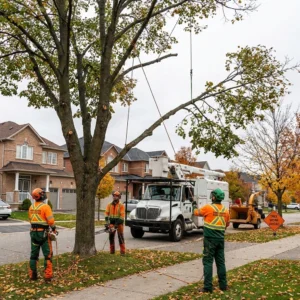
Our team provides comprehensive tree care services specifically designed for Toronto’s unique urban landscape. Whether it’s routine pruning, emergency tree removal, or detailed arborist reports, we use modern equipment and proven techniques to ensure your trees, hedges, and shrubs stay safe, healthy, and well-maintained.
Experience Premium Tree Services in Toronto
TREE REMOVAL
TREE REMOVAL
TREE PRUNING
TREE PRUNING
STUMP REMOVAL
STUMP REMOVAL
TREE PERMITS
TREE PERMITS
EMERGENCY REMOVAL
EMERGENCY REMOVAL
ARBORIST REPORTS
ARBORIST REPORTS
How Much Does Tree Removal Cost?
Get an instant estimate in 60 seconds
🔥 Used by 500+ Toronto homeowners this month
Tree Problems? We've Got Solutions. Get a Free Estimate from Certified Tree Experts in Toronto.
Tree Removal Service
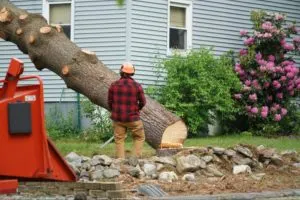
Providing professional Toronto tree removal services for a greener and safer environment in the GTA.
Tree Trimming and Pruning
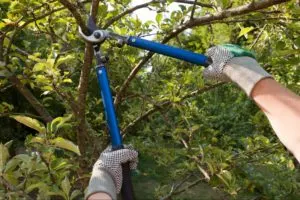
Professional tree trimming and pruning services to promote healthier growth and maintain the beauty and safety of your trees in Toronto.
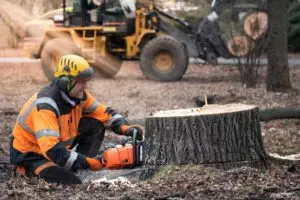
Stump Removal
At Toronto Tree Removal we also offer full stump removal for a flawless and safe landscape of your property in GTA
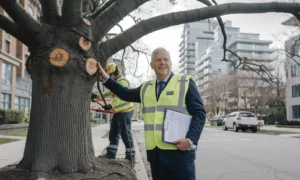
We Handle All Tree Removal Permits
At our company we take care of everything related to the comprehensive arborist reports & tree removal permits. We understand that the requirements, for permits may vary depending on the location. For instance in Toronto you need a permit to remove owned trees with a diameter of 30 cm or more. In Mississauga on the hand you require a permit if you plan to remove than two trees within a year. Our team of certified Arborists is well informed about the regulations. Will handle all the necessary applications and permits, for tree removal.
Top of the Line Equipment, for Tree Removal
We have a range of state of the art tools for removing trees, including types of aerial lifts, chip trucks, wood and brush chippers light duty cranes and precision saws. This advanced equipment allows us to complete our work efficiently while prioritizing safety and reliability. By embracing the advancements in technology our goal is to minimize any negative impact on your property during the tree removal process. We are committed, to leaving the site clean and pristine after each operation. Recognizing the importance of your landscaping and development projects timelines we utilize high quality tools and a reliable fleet that enables us to handle projects of any size while meeting your requirements and deadlines.
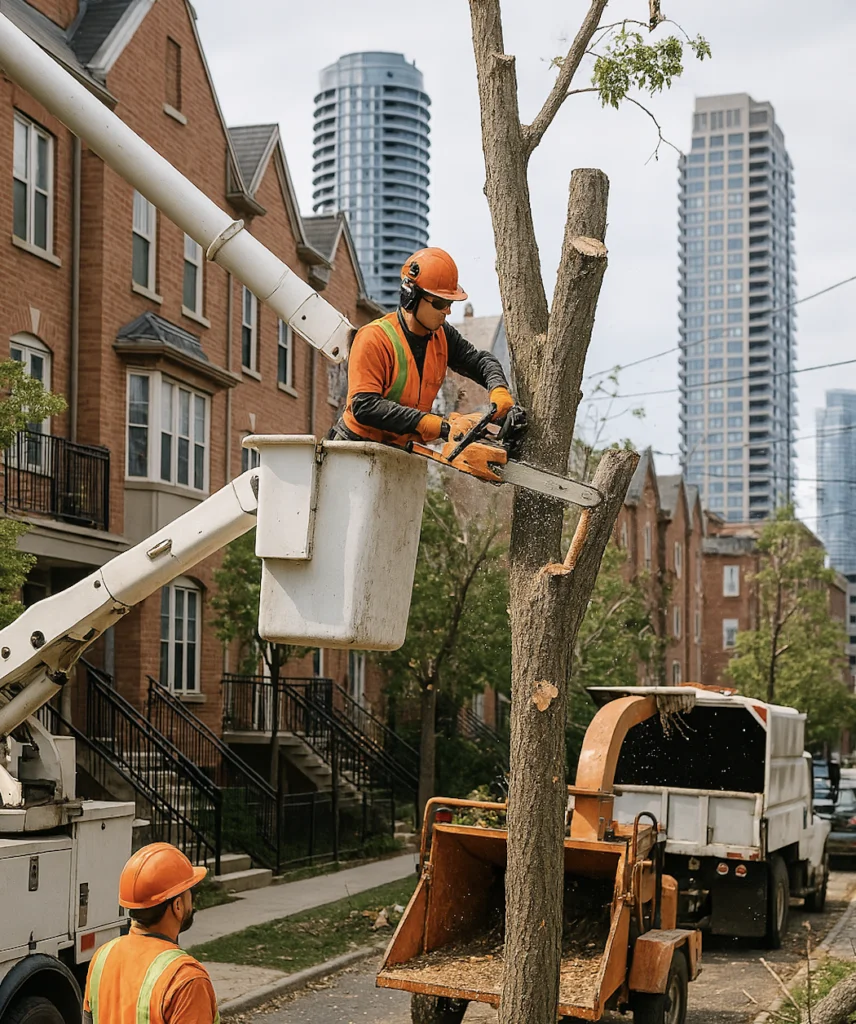
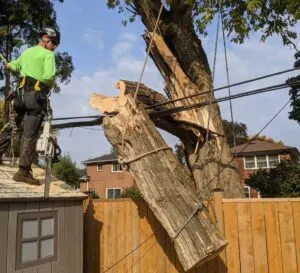
Safety Gear To Protect Your Property And Our Arborists
Ensuring safety is of importance when it comes to Toronto tree removal and protecting against property damage and personal injury. Our team of arborists not has OCT training but also holds ISA and working, at heights certifications. They are skilled in using rigging equipment to handle branches and wood, with precision prioritizing safety and control throughout the process. Our staff is fully equipped with the protective gear while climbers rely on approved harnesses, ropes, carabiners and other safety devices. All these measures contribute to achieving predictable outcomes for every project we undertake.
We have been rated as the #1 Tree Removal Company in the city. We service all regions including Durham, York, Peel, Halton and Toronto. Our services can cover any size job both residential and commercial. Our expert arborists in Toronto know and understand the delicate and dangerous business of removing a tree. In the long run, if you go with an amateur company, you can end up paying more because of mistakes they can make due to lack of experience. With our decades of experience in removing trees in the the greater Toronto Area ( GTA) , we are the go to team for using the safest practices and cutting-edge equipment to effectively and safely remove even the most difficult of trees with minimal intrusion to the homeowner. To keep a tree healthy, some jobs are just too big and dangerous for you to do on your own and that’s when you should seek professional expertise.
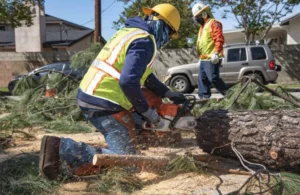
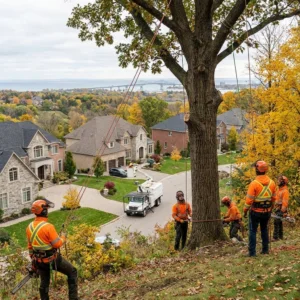
In general, a good way to determine when it’s time for the pros, we generally say that : if you can’t work with both feet on the ground, that’s when you should hire a professional tree service. We have a commitment to responsibly remove any problematic trees while keeping the property intact, and without disrupting any healthy trees that surround the problem. As experts in this field, we place value in our customers’ overall experience with us and we strive to deliver a professional tree service from initial contact to the moment our trucks leave your property having completed the job. Don’t trust your tree removal job to any company that can create other problems for you, and choose us so that you can relax and be confident that the job will get finished on time and smoothly.
Frequently Asked Question about Tree Removal in Toronto (GTA)
Tree removal costs in Toronto vary widely depending on factors like tree size, location, and additional services. To get an accurate quote tailored to your specific needs, please contact us directly.
Getting a permit to remove a tree usually involves contacting the city or Toronto’s Urban Forestry department. We can handle the permit process for you, ensuring a smooth and hassle-free experience.
Yes, you can remove a tree on your property, but you will most likely need a permit. We can help you with the necessary permits and make it a smooth tree removal process for you!!!
Fines for removing a tree without a permit in Toronto can vary, but they can be expensive. To avoid fines and legal issues, it’s essential to obtain the necessary permits for a tree removal company and our team can help ensure all the papers are filed and permits are correct.
Late fall and winter are typically cheaper for tree removal due to lower demand. For precise pricing, contact us for a free estimate and quote.